Platform Capabilities One platform underneath every product built on it.
Each product on ARMA inherits the same device integration, the same data model and the same event handling instead of rebuilding them.
Device & endpoint management
Device models, tag definitions and read/write configuration for every endpoint on the platform.
Connectivity & network management
Modbus, IEC 60870-5-104, OPC-UA and MQTT, with on-site buffering so a lost link does not become a lost dataset.
Data management, processing & analysis
Normalisation into one asset and tag model, time-series storage and a calculation engine shared by every product above.
Application development
The layer products are built on, so a new application starts from an existing data and integration foundation.
Cybersecurity & access control
Role-based permissions, multi-tenant separation and an audit trail over commands, configuration and user activity.
Monitoring & event processing
Live monitoring with an event and alarm engine that classifies, prioritises and routes what it detects.
AI Across Both PlatformsModels that do the work nobody has time to do by hand.
These four capabilities sit on top of the shared data layer, which is why they behave the same way whether the asset is a photovoltaic plant or a wind turbine — they read from the same normalised model either way.
Predictive Maintenance
Plan the intervention around a prediction, not a calendar.
Operational history, alarm history and equipment records are used to flag the assets most likely to need attention next — so a maintenance window is scheduled where the risk actually is, instead of at a fixed interval for everything.
Hourly Production Estimation
Tomorrow's output, estimated hour by hour.
Production is estimated per hour for each site from weather data and each asset's own historical response. Accuracy is measured against what the site went on to produce, so the model's reliability is visible rather than assumed.
Workforce Management · WFM
Match the open work to the people who can do it.
Outstanding work is planned against the teams available — who is assigned, where they are working, and what is still open — so scheduling is done against current workload rather than reconstructed in a spreadsheet each week.
Smart Assistance
Guidance where the user is, not in a manual.
An in-platform assistant helps users reach the view they need and make sense of what they are looking at — shortening the distance between a question and the screen that answers it, especially for a new operator.
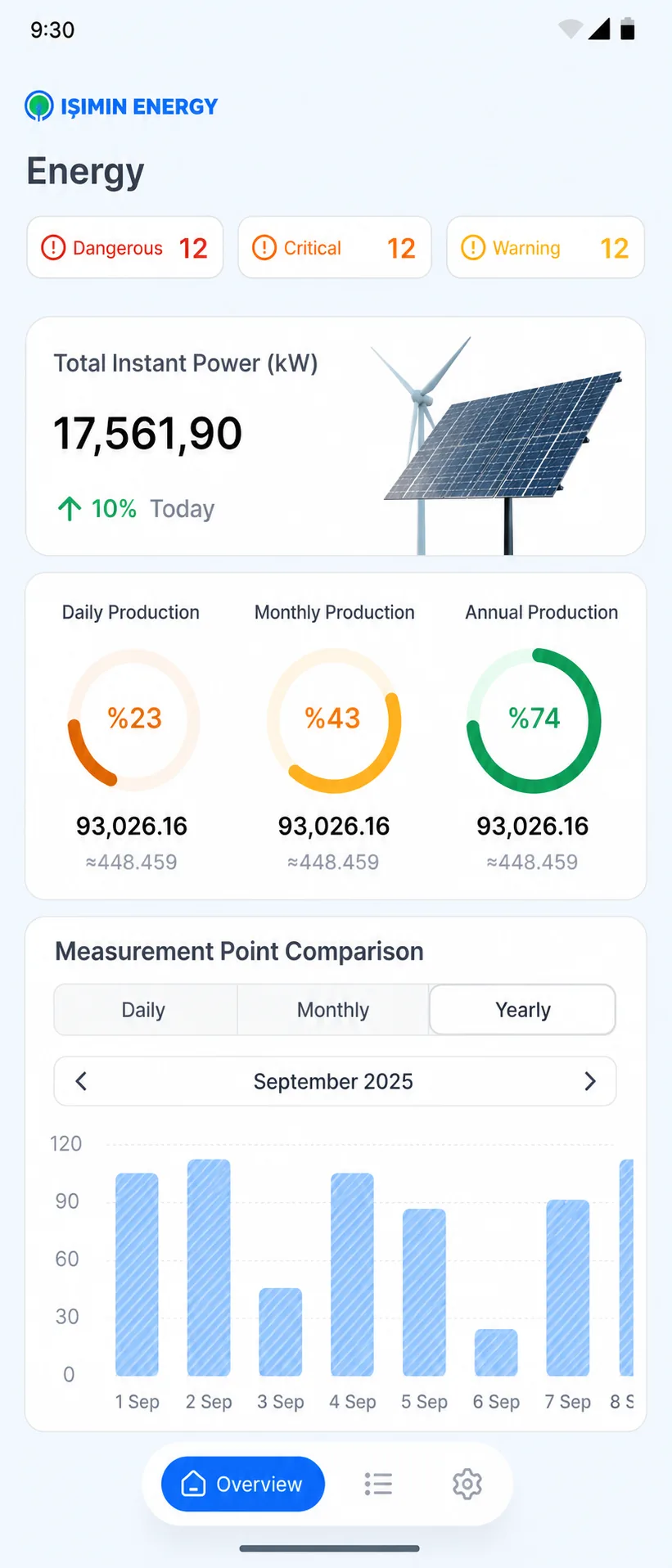
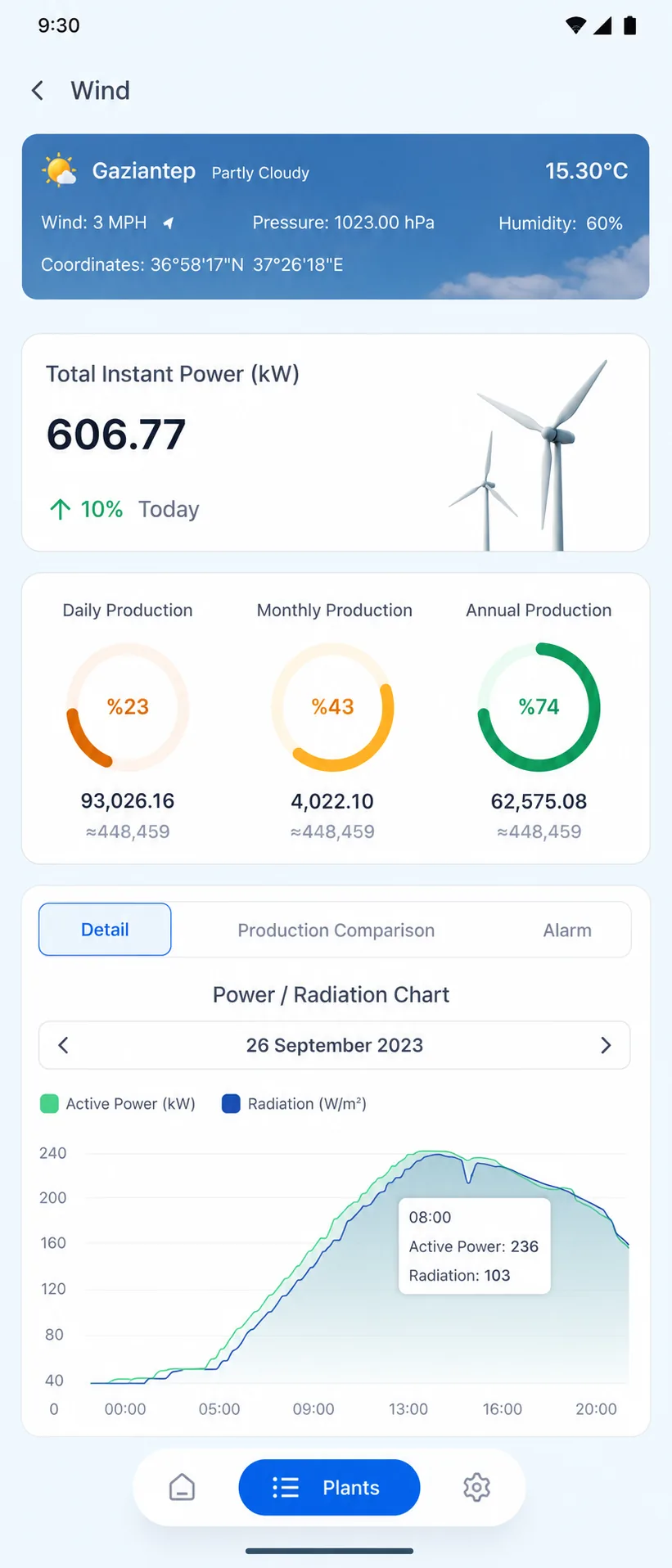
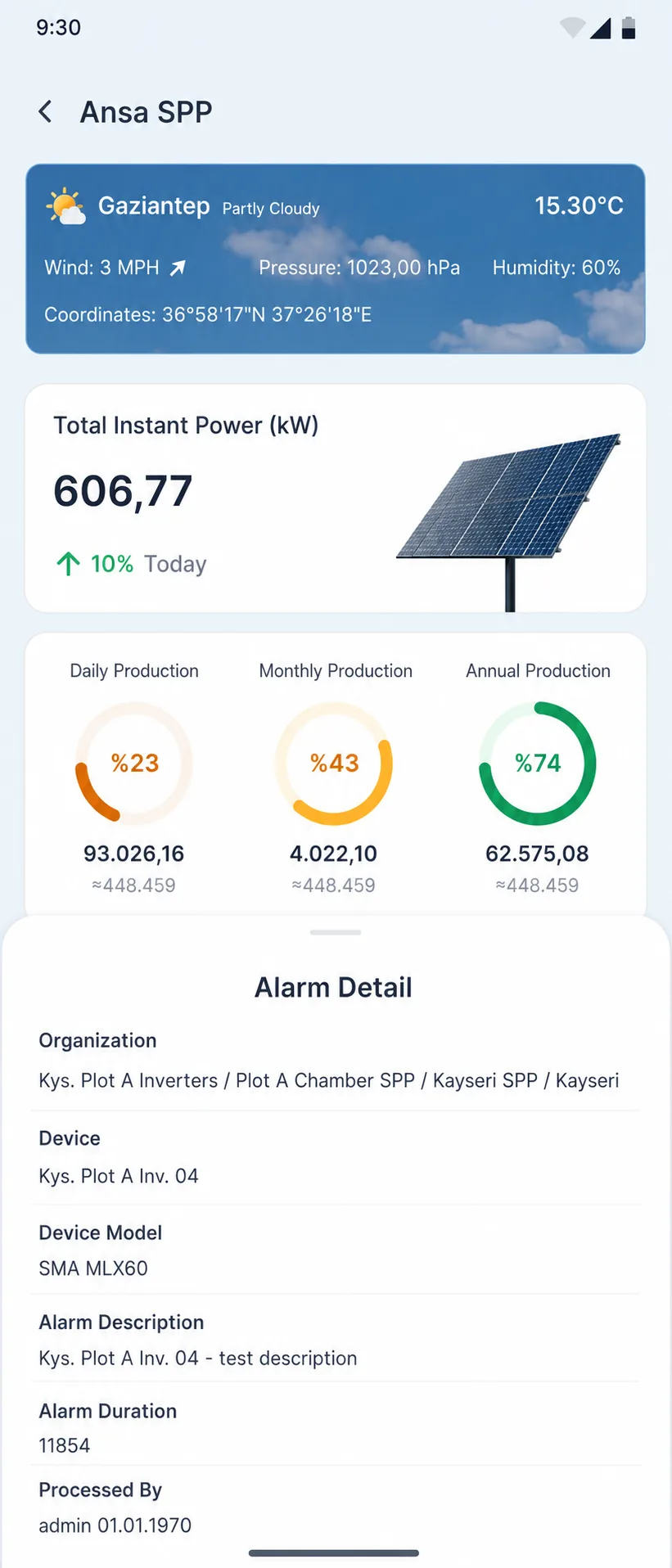
Mobile Application
Your fleet, in your pocket — solar and wind, live, wherever you are.
The same portfolio, plant and turbine data your team sees on desktop, carried into a native mobile app for field visits, night shifts and everything in between.
Devices & Protocols
Designed for mixed-brand solar portfolios through standard industrial protocols.
ARMA-SWEM connects using Modbus, OPC-UA, IEC 60870-5-104 and MQTT — the protocols already running in inverters, meters, weather stations and plant substations. Specific device integrations are scoped and validated per deployment.
Supported Device Types
Inverters (string & central) · String / combiner boxes · Energy meters · Transformers · Weather stations · Pyranometers · Sensors · Data loggers · SCADA devices & RTUs
Search Supported Inverter & Data-Logger Brands
Huawei · Sungrow · SMA · Fronius · GoodWe · Growatt · Solis (Ginlong) · SolarEdge · ABB / FIMER · Delta · Kstar · Sofar Solar · Deye · TBEA · KACO new energy · Chint Power (CPS) · Solplanet · Ingeteam · Schneider Electric (Conext) · Enphase (micro-inverter) · Hoymiles (micro-inverter) · APsystems (micro-inverter)
Not on the list? Most inverters and data-loggers connect over Modbus TCP/RTU or OPC-UA — ask us about your model .
Communication Protocols
Modbus TCP / RTU · OPC-UA · IEC 60870-5-104 · MQTT · REST
Device categories describe the equipment classes ARMA-SWEM is designed to read from. Brand names above are shown as compatibility examples via standard protocols — not a confirmed or certified integration list; specific models are validated per deployment.
The company behind ARMA
ARMA is built .
by Atolla
Atolla develops technology products and solutions built on domestic production, carrying out research and development to produce software and technology for the private sector and for public institutions.
Atolla Bilişim carries out its work in the light of scientific study, bringing universities and the private sector into its R&D activities.
We analyse the requirements in your company and offer you the software solutions you need.
“Our motto is for your energy.”